Manufacturing Insights
How to Evaluate a Malaysian Manufacturing Partner
What International Buyers Should Verify When Selecting a Malaysian Manufacturing Partner
When evaluating a manufacturing partner in Malaysia or elsewhere, international buyers may compare confirmed processes, communication, OEM or ODM scope, packaging capability and project requirements.
When international buyers look for manufacturing partners, price is rarely the only factor. A competitive quotation offers little lasting value if shipments arrive late, communication becomes difficult or product quality varies.
A supplier should be assessed against the buyer's specific product, market and commercial requirements. Country of origin alone does not confirm experience, service levels or export capability.
Why Do International Buyers Source from Malaysia?
Buyers sourcing from Malaysia should evaluate each supplier's relevant manufacturing processes, ability to communicate requirements, packaging scope and any export-related responsibilities required for the project.
Steel Craft Living is based in Ipoh, Perak, Malaysia and supports international product discussions through its established website contact channels.
Factors Global Buyers Evaluate in a Malaysian Manufacturer
| Evaluation factor | Why it matters | What buyers should verify |
|---|---|---|
| Product experience | Relevant knowledge can reduce development uncertainty | Comparable product-category experience |
| OEM capability | Custom projects require suitable development support | Available customisation and engineering scope |
| Quality control | Repeatability depends on defined checks | Inspection stages, criteria and records |
| Communication | Clear updates support timely decisions | Project contact and response process |
| Prototyping | Samples help confirm design before production | Sample stages, timing and approval method |
| Production capacity | Capacity must suit the planned order | Realistic output for the specific product |
| Lead time | Reliable planning supports inventory decisions | Assumptions, dependencies and schedule |
| Packaging | Protection affects condition after transport | Materials, testing approach and pack method |
| Export documentation | Correct documents support shipment preparation | Experience with required commercial documents |
| Repeat-order consistency | Future orders should match the approved standard | Process control and change management |
How to Evaluate a Malaysian Manufacturing Partner
- Confirm experience with the relevant product category.
- Review available products, drawings or past project examples.
- Ask about OEM and customisation capabilities.
- Confirm materials, processes and surface finishes.
- Review the sampling and prototype process.
- Define quality standards and inspection points.
- Verify packaging and export-documentation experience.
- Confirm production capacity and realistic lead times.
- Request a quotation with clearly stated assumptions.
- Approve samples before mass production.
- Start with a controlled first order where appropriate.
- Review performance before expanding the relationship.
Evaluate Relevant Experience
Relevant product-category experience should be confirmed directly with each supplier. Buyers can ask for information appropriate to their project without assuming that a location or industry category proves a particular track record.
For a sourcing decision, confirm the supplier's approved capabilities, product fit and evidence relevant to the proposed project.
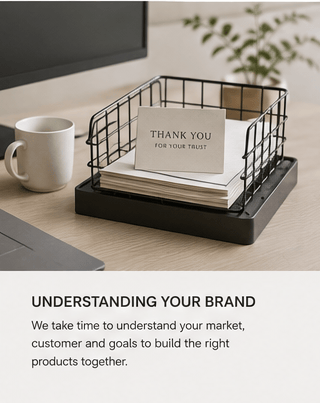
Define Quality Requirements
Buyers should define the approved product requirements and agree how any checks will be handled for their project.
- Materials and dimensions that require confirmation
- Joining, finish or assembly requirements, where applicable
- Packaging requirements for the intended product and destination
- Acceptance criteria and any agreed review points
Each supplier should explain only the controls it can document for the proposed product. Buyers should not assume that a sample or prior order establishes an unverified ongoing result.
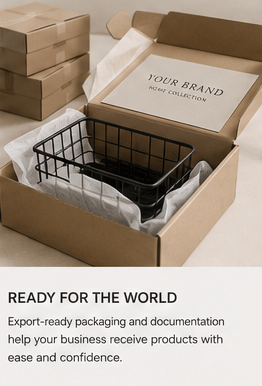
Communication Makes Projects Easier
Manufacturing partnerships depend on clear and timely communication about specifications, schedules, prototypes, packaging and revisions. Experienced exporters may understand the importance of project updates.
Clear communication helps confirm technical requirements, reduce misunderstandings, manage changes, review timing, identify issues earlier and coordinate packaging and shipping.
Strong OEM and Customisation Capabilities
Many Malaysian manufacturers support OEM, ODM or private-label home and living products, although capabilities vary by supplier and category.
Options may include dimensions, wire thickness, materials, structural details, metal surface-finishing options, colour, branding, labels, packaging and assembly. An experienced partner may refine designs, improve manufacturability and reduce unnecessary complexity. Learn about the OEM metal product development process.
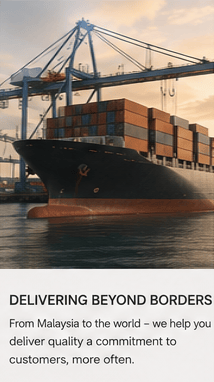
Confirm Export and Logistics Responsibilities
International projects may require packaging, labelling, documentation and shipment coordination. The responsible parties and project requirements should be agreed before an order proceeds.
- Required documents and the responsible party
- Labels, carton markings and barcodes, where required
- Packaging requirements for the product and destination
- Shipment preparation and coordination responsibilities
Steel Craft Living's confirmed in-house capability is packaging. Any export documentation, loading or shipment coordination support must be confirmed for the individual project.
Quality Without Unnecessary Complexity
Many buyers value manufacturers that balance requirements with practical production planning. The objective is to make a product suitable for its use, target price and market expectations rather than make it unnecessarily complex.
Practical engineering may simplify components, improve strength, reduce assembly time, optimise material use, improve packaging efficiency and select a suitable finish. This can keep projects commercially realistic while maintaining approved requirements.
Built for Long-Term Partnerships
Strong sourcing relationships often continue beyond one order. As a manufacturer becomes familiar with products, quality expectations, packaging and target markets, later projects may become easier to manage.
Long-term cooperation can support faster discussions, better understanding of requirements, efficient repeat orders, improved planning, ongoing refinement and complementary product development. Trust develops through performance over time, not pricing alone.
Why This Matters for Home & Living Products
Home and living products combine appearance, function and repeatable quality. Details such as dimensions, welds, coating and packaging affect how customers perceive wire baskets, kitchen organisers, retail stands, shelves and accessories.
Experienced manufacturers may support these requirements through manufacturing knowledge, quality controls and export experience. Explore current retail display and home organisation products.
Choosing the Right Manufacturing Partner
Not every manufacturer offers the same services, experience or capability. Buyers should evaluate suppliers individually rather than deciding only by country of origin or price.
Review relevant experience, product knowledge, OEM capability, prototypes, quality control, communication, export support, capacity, packaging, lead time and willingness to support long-term cooperation. A dependable partner contributes to development and supply-chain planning as well as production.
Supplier Evaluation Summary
Depending on project needs, buyers may wish to verify:
- ✓ Relevant product-category experience
- ✓ Confirmed manufacturing processes
- ✓ Project communication approach
- ✓ OEM and private-label scope
- ✓ Packaging capability
- ✓ Export responsibilities, where applicable
- ✓ Technical input for the proposed product
- ✓ Ability to support the intended commercial relationship
These points must be confirmed directly with each supplier.
Malaysian Manufacturer Evaluation Checklist
- ✓ Product-category experience
- ✓ Manufacturing processes
- ✓ Materials
- ✓ OEM capabilities
- ✓ Drawing support
- ✓ Prototype process
- ✓ Quality-control stages
- ✓ Inspection criteria
- ✓ Surface-finishing capability
- ✓ Production capacity
- ✓ Lead time
- ✓ Minimum order quantity, if applicable
- ✓ Packaging capability
- ✓ Export experience
- ✓ Communication contact
- ✓ Quotation terms
- ✓ Payment terms
- ✓ References or documented project experience, when available
Final Thoughts
Country of origin is one factor in supplier research, but it does not establish a supplier's capabilities or track record. The right choice requires supplier evaluation, clear specifications, approved samples and agreed quality requirements.
Explore OEM manufacturing in Malaysia or discuss your sourcing requirements.
Frequently Asked Questions
Why do international buyers source products from Malaysia?
Buyers may value experienced suppliers with OEM capability, practical engineering, clear business communication, quality-control processes and export experience. Each supplier should still be evaluated individually.
Are Malaysian manufacturers suitable for OEM projects?
Some experienced Malaysian manufacturers support OEM, ODM and private-label work. Suitability depends on the manufacturer’s product experience, processes and development capability.
What products can Malaysian metal manufacturers produce?
Capabilities vary, but relevant manufacturers may produce wire baskets, organisers, shelves, retail fixtures and custom metal home accessories using processes suited to each product.
How should buyers evaluate manufacturing quality?
Buyers should define specifications and inspection criteria, review samples, understand in-process controls and confirm how materials, dimensions, welds, finishes, assembly and packaging are checked.
Can Malaysian manufacturers support private-label packaging?
Some manufacturers and exporters can support labels, carton markings, barcodes and custom packaging, subject to the project requirements.
What export support should an international buyer expect?
The required support should be agreed for each project and may include commercial documentation, packing lists, labelling, carton markings, export packaging and shipment coordination.
What information should a buyer provide when requesting a quotation?
Provide the product description, drawings or reference images, dimensions, material, finish, expected load or usage, estimated quantity, packaging and branding requirements, target market, delivery timing and destination country or port where relevant.
- • Product description
- • Drawings or reference images
- • Required dimensions
- • Material
- • Surface finish
- • Expected load or usage
- • Estimated order quantity
- • Packaging requirements
- • Branding requirements
- • Target market
- • Required delivery timing
- • Destination country or port, where relevant
Discuss Your OEM Metal Product Requirements
Share your product concept, target market, dimensions, preferred finish, packaging requirements and estimated order quantity with Steel Craft Living in Malaysia.