Metal Finishing
Powder Coating vs Painting for Metal Products
Understanding the Practical Differences Before You Choose
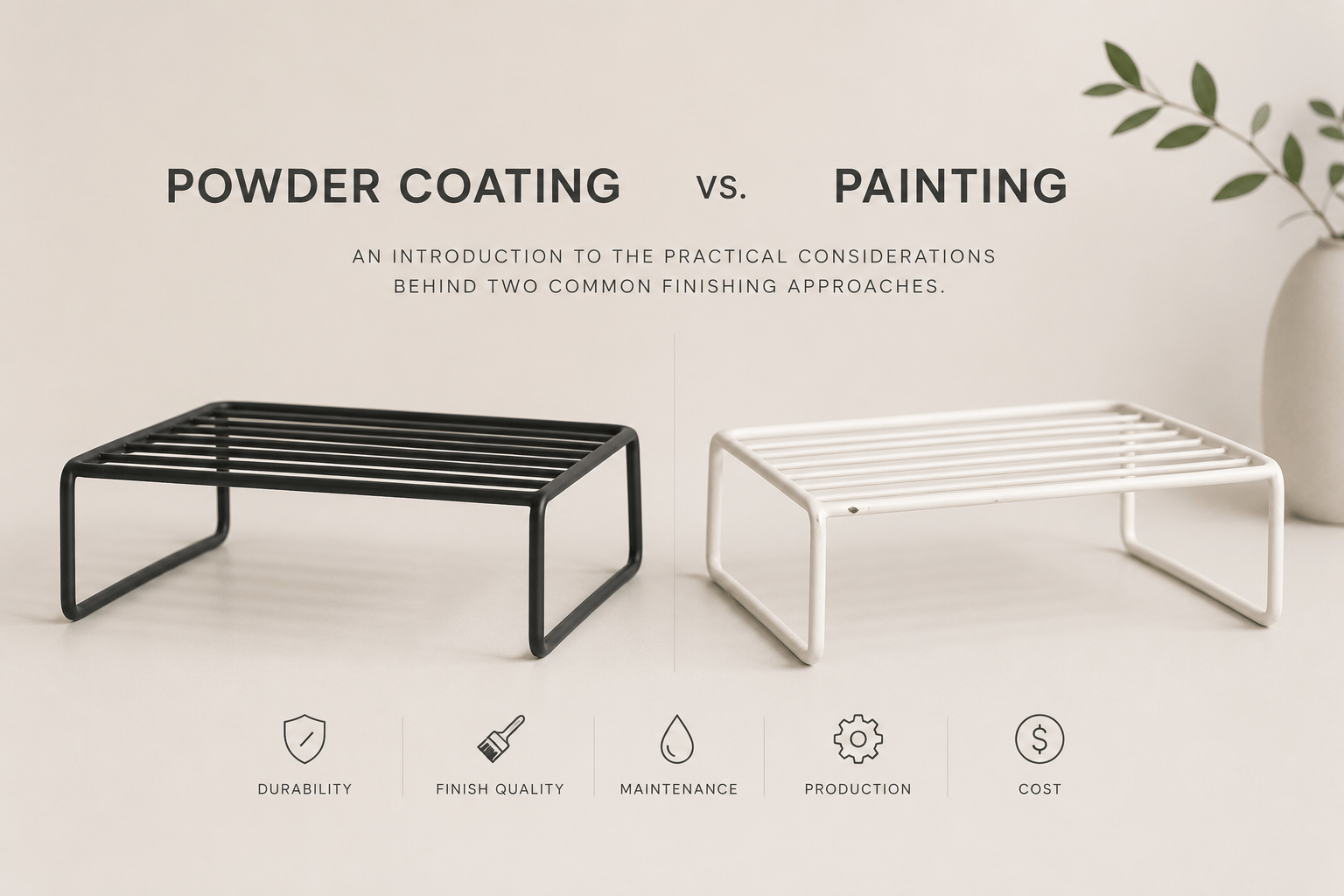
Powder coating usually offers stronger resistance to scratching, chipping and everyday wear, making it suitable for many high-use metal products. Traditional painting may be more practical when local touch-ups, specialised visual effects or frequent colour changes are required.
When people compare powder coating and painting, the conversation often starts with colour. Which finish looks better? Which offers more colour options? Which costs less?
While these questions are valid, they do not tell the whole story. For manufacturers, distributors and product designers, choosing a finishing method is about much more than appearance. The right finish affects durability, maintenance, production efficiency and how customers perceive product quality.
Whether you are sourcing metal home and retail display products, storage solutions or custom wire products, understanding the practical differences can support a more informed decision.
Powder Coating vs Painting: What Is the Main Difference?
The main difference is that powder coating applies dry, electrostatically charged powder that is heat-cured onto metal, while traditional painting applies a liquid coating that dries or cures on the surface. Powder coating is commonly chosen for durability and repeatability, while painting may offer easier repairs and greater decorative flexibility.
Powder Coating vs Painting Comparison
| Factor | Powder coating | Traditional painting |
|---|---|---|
| Application method | Dry powder applied electrostatically | Liquid coating applied by spray, roller or brush |
| Curing process | Heat-cured in an industrial oven | Dries or cures according to the paint system |
| Durability | Strong resistance to routine wear | Suitable performance depends on paint system and use |
| Finish consistency | Consistent coverage for repeat production | Flexible, with consistency dependent on application |
| Colour and visual effects | Wide colour, gloss and texture choices | Well suited to gradients and detailed effects |
| Touch-up and repair | Local repairs may be difficult to blend | Often easier to touch up locally |
| Production volume | Practical for controlled repeat production | Can suit smaller runs and frequent colour changes |
| Typical applications | Handled home products, racks and displays | Decorative, low-wear or on-site applications |
How to Choose the Right Metal Finish
- Define where the product will be used.
- Assess expected handling and wear.
- Review moisture and corrosion exposure.
- Confirm the required appearance and colour.
- Decide whether easy local repair is important.
- Review production quantity and colour variation.
- Compare finishing cost across the complete production process.
- Approve a colour sample or prototype before mass production.
Why Surface Finishing Matters
Metal is strong, but without suitable surface protection it can be vulnerable to its environment. Exposure to moisture, scratches, sunlight, cleaning chemicals and regular wear may shorten a product's service life when the finish is not appropriate for its intended use.
A quality surface finish helps protect the metal while giving the product its final appearance. It is one of the last manufacturing stages, but one of the first features customers notice. Finish selection should not be treated as an afterthought.
What Is Powder Coating?
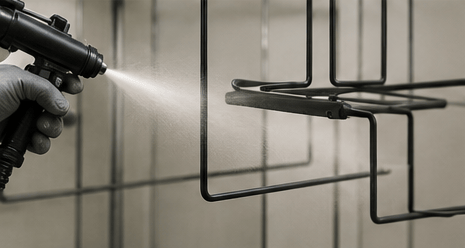
Powder coating is a dry finishing process in which fine powder particles are electrostatically applied to a prepared metal surface before being cured in an industrial oven. During curing, the powder melts and forms a continuous coating that bonds to the metal.
Unlike traditional liquid paint, powder coating does not rely on liquid solvents for application. It can create a consistent and relatively thick finish suitable for products exposed to regular handling.
Because of its durability and clean appearance, it is commonly used for metal home products, retail display stands, storage baskets, shelving and furniture components.
What Is Traditional Painting?
Traditional painting applies liquid paint using spray equipment, rollers or brushes. After application, the coating dries or cures according to the paint system being used.
Painting remains practical when a product requires local touch-ups, specialised colour matching, artistic effects or on-site refinishing after installation. For decorative or lower-wear products, it can offer useful flexibility and convenience.
Comparing Durability
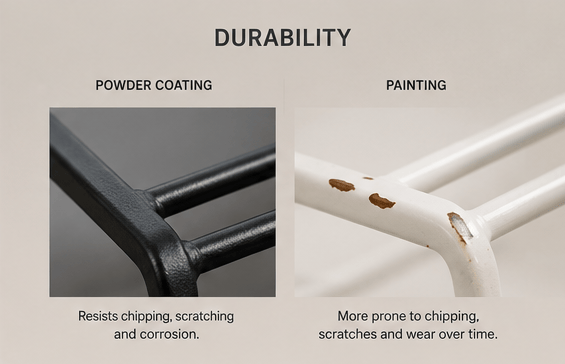
Metal display stands, storage racks and home organisation products may be moved, cleaned and handled frequently. Powder coating commonly provides strong resistance to scratching, chipping, peeling, corrosion, fading and minor impact damage.
Because it forms a durable protective layer, a powder-coated product may maintain its appearance longer in demanding environments. Traditional paint can perform well under normal conditions but may be more vulnerable to scratches and localised damage in high-traffic applications.
For long-term retail or commercial use, durability can become an important deciding factor.
Appearance and Finish Quality
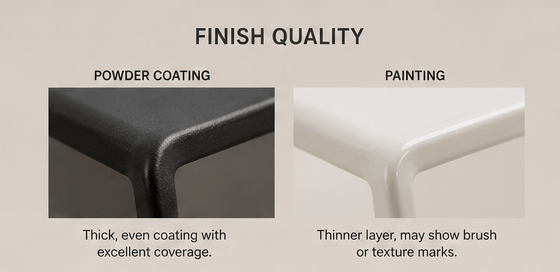
Both methods can produce attractive results. Powder coating commonly creates a smooth, consistent finish across repeated production runs, including matte, satin, textured, fine-sand and custom-colour options.
Traditional painting offers greater flexibility for gradients, artistic effects, multi-layer finishes, localised details and complex treatments. Powder coating may suit production consistency, while liquid painting may better serve artistic flexibility.
Maintenance Over Time
A well-applied powder-coated surface is generally easy to clean and can resist routine wear. However, repairing it is not always straightforward; a damaged component may require complete recoating for a consistent appearance.
Painted surfaces are often easier to repair through local touch-ups. The right choice depends partly on whether long-term resistance or ease of repair is more important.
Production Efficiency
For OEM metal manufacturing in volume, powder coating is well suited to controlled repeat production once colour, film thickness and curing conditions are established.
Painting may offer flexibility for smaller orders, frequent colour changes, low-volume custom work, installed structures and on-site refinishing. The suitable method depends on quantity, dimensions, colour variation and production setup rather than quality alone. The OEM metal product development process should review finishing early.
Which Finish Is Better for Retail Display Products?
Retail fixtures may be assembled, transported, repositioned, stocked and cleaned regularly. Powder coating is commonly selected for retail display stands, wire racks, merchandising fixtures, baskets, shelving and countertop units because of its resistance to routine handling.
Traditional painting may still be appropriate where detailed graphics, specialised decorative effects, on-site modification or easy local repair are important. Those reviewing a fixture can also read about choosing a metal display stand for retail.
There Is No Single Best Choice
The more useful question is which finish is better for this product and application. Powder coating may suit priorities such as durability, consistency, regular handling and repeated production. Painting may suit easy touch-up, decorative flexibility, smaller quantities, frequent colour changes and on-site application.
The final decision should reflect intended use, environment, appearance, production quantity and maintenance needs. For custom metal product development, each of these factors should be confirmed before approval.
Metal Finish Selection Checklist
- ✓ Indoor or outdoor use
- ✓ Moisture exposure
- ✓ Expected handling
- ✓ Scratch resistance
- ✓ Corrosion resistance
- ✓ Required colour
- ✓ Gloss or texture
- ✓ Decorative effects
- ✓ Touch-up requirements
- ✓ Production quantity
- ✓ Product dimensions
- ✓ Target cost
- ✓ Packaging and transport conditions
Final Thoughts
Surface finishing is one of the final manufacturing stages, but it has a lasting effect on how a metal product performs. Choosing between powder coating and painting requires balancing durability, maintenance, production requirements, appearance and customer expectations.
For distributors sourcing OEM metal home products or retail display fixtures, these differences can help identify a finish suited to both the product and its target market. A quality finish protects the metal while supporting the perceived quality of the product and its brand.
Frequently Asked Questions
What is the difference between powder coating and painting?
Powder coating applies dry powder that is heat-cured onto metal, while painting applies a liquid coating that dries or cures on the surface.
Is powder coating more durable than paint?
Powder coating commonly offers stronger resistance to scratching, chipping and routine wear, but suitability still depends on the product, environment and coating system.
Can powder-coated metal be repaired?
It can be repaired, but a local repair may not match the original appearance. Complete recoating of the affected component may sometimes be more suitable.
Is painting better for small production quantities?
Painting may be practical for small quantities or frequent colour changes, depending on the product, required finish and production setup.
Which finish is suitable for retail display stands?
Powder coating is commonly selected for regularly handled retail fixtures, while painting may suit displays requiring specialised effects, on-site changes or easier local repair.
Can powder coating be produced in custom colours?
Yes. Custom colour matching may be available, subject to the product requirements, approved sample and production setup.
What information should a buyer provide before selecting a finish?
Provide the product type, material, dimensions, intended use, indoor or outdoor environment, expected handling, preferred colour and texture, order quantity, corrosion requirements, maintenance expectations and a reference sample or colour code when available.
- • Product type
- • Material
- • Product dimensions
- • Intended use
- • Indoor or outdoor environment
- • Expected handling
- • Preferred colour and texture
- • Order quantity
- • Corrosion requirements
- • Maintenance expectations
- • Reference sample or colour code, when available
Choose the Right Finish for Your Metal Product
Share your product application, expected usage, preferred appearance, order quantity and target market with Steel Craft Living.