Private Label
Private Label Opportunities for Home & Living Products
Building a Home & Living Collection That Customers Remember
Private-label home and living products allow distributors and retailers to develop coordinated collections under their own brand. The strongest opportunities usually come from consistent design, useful product customisation, reliable quality, cohesive packaging and a manufacturing partner that understands product development.
Walk through any homeware store today and many products may look surprisingly similar. Storage baskets, kitchen organisers, display shelves and home accessories can have only minor differences in packaging or branding.
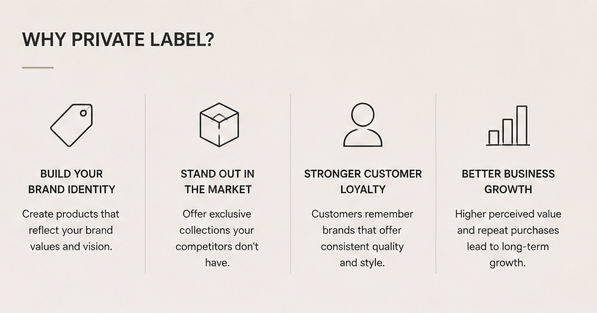
This is why more distributors and retailers are exploring private-label home and living products. Rather than competing on price alone, they can create collections that reflect their brand identity and appeal to the lifestyle their customers value.
With the right manufacturing partner, private label is not simply about adding a logo. It is about building a range that feels considered from start to finish.
What Are Private-Label Home and Living Products?
Private-label home and living products are items manufactured for a distributor, retailer or brand and sold under that company’s own name. They may use existing product designs with customised finishes and packaging, or they may be developed as more extensively customised OEM products.
Private Label vs Standard Catalogue Products
| Factor | Private-label products | Standard catalogue products |
|---|---|---|
| Branding | Sold under the buyer’s brand | Usually retains the supplier’s standard presentation |
| Product exclusivity | May be agreed for a project, but is not automatic | Generally available to multiple buyers |
| Design customisation | May include dimensions, finish or structural changes | Typically limited to the existing design |
| Packaging | Can be coordinated with brand requirements | Usually uses standard packaging |
| Speed to market | Depends on the level of development and approval | Often faster when stock or production is available |
| Development input | Buyer and manufacturer may refine the product together | Usually requires less development input |
| Price comparison | Less directly comparable when specifications differ | Often easier to compare across sellers |
| Customer recognition | Can build recognition for the buyer’s own collection | Recognition may centre on the product or supplier |
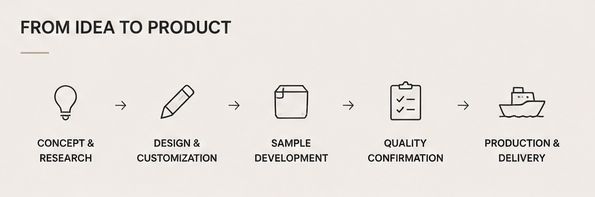
How to Build a Private-Label Home Collection
- Define the target customer and retail market.
- Select a clear design direction.
- Choose a focused group of complementary products.
- Confirm materials, dimensions and finishes.
- Identify useful customisation opportunities.
- Review prototypes or samples.
- Develop coordinated packaging and labels.
- Confirm quality requirements.
- Plan the first order and product launch.
- Expand the collection based on market feedback.
Why Private Label Is Growing
Consumers are becoming more selective about products they bring into their homes. They often look for reliable quality, consistent design and products suited to their preferred style. Retailers also need ways to offer products that customers cannot easily compare across every competing store.
Private label can bridge that gap. Businesses can develop differentiated collections that strengthen brand recognition. When customers associate a useful, well-designed product with the retailer’s brand, the relationship can extend beyond a single purchase.
Think Beyond the Logo
One misconception is that private label means placing different packaging around a standard product. Stronger collections are usually built around a clear design direction.
- A consistent colour palette
- Matching finishes
- Coordinated materials
- Repeated shapes or proportions
- A defined lifestyle theme
- Consistent packaging and photography
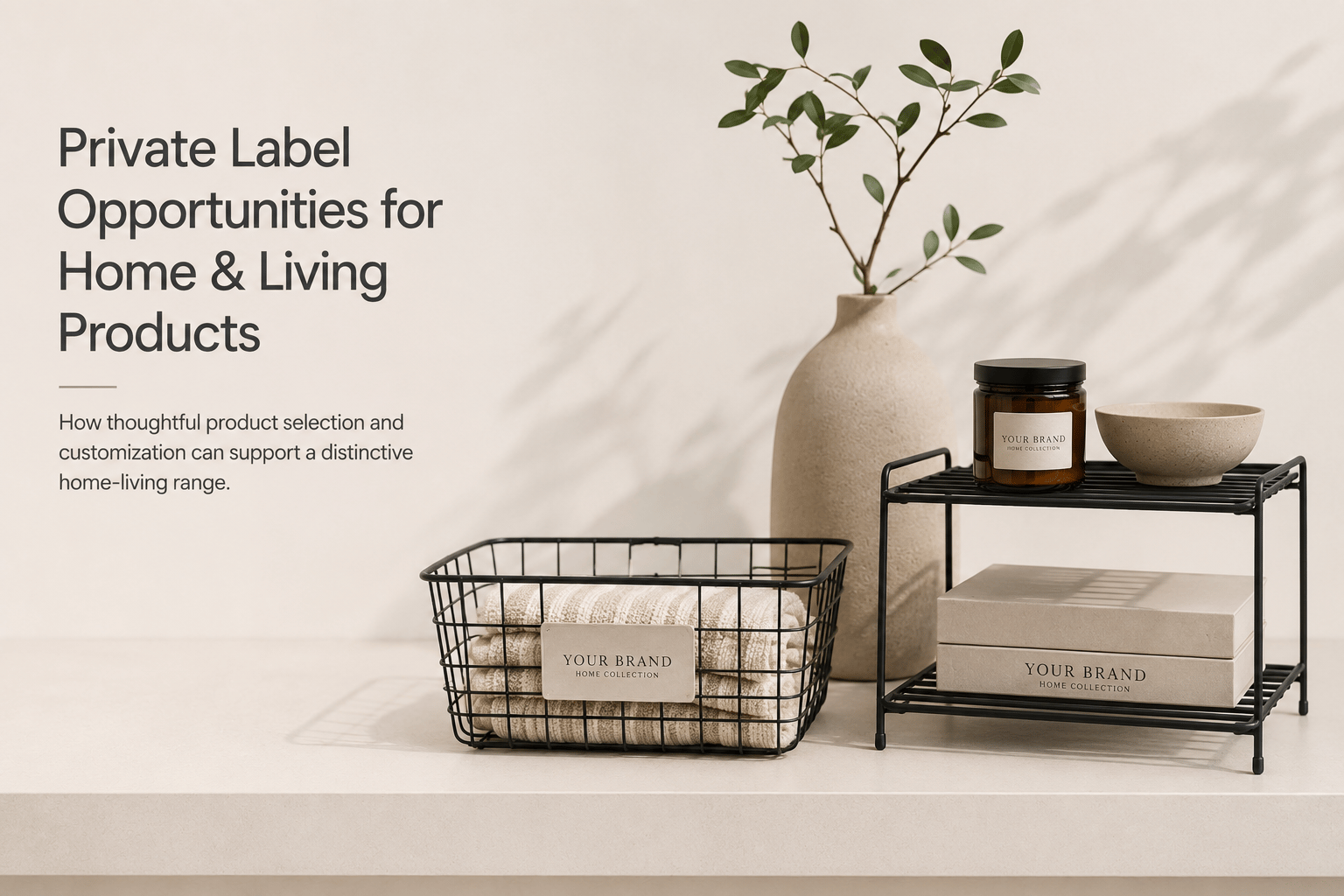
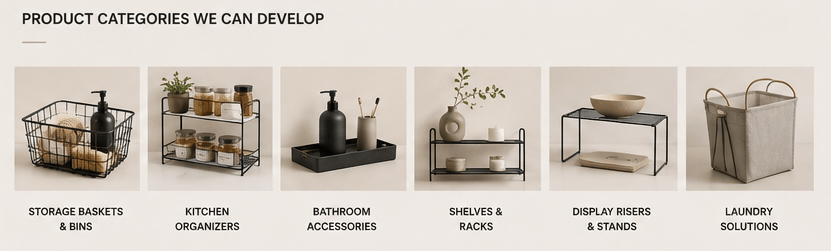
A matte black wire basket, matching kitchen organiser, minimalist display riser and coordinating shelves can feel more considered when they belong to the same collection. Customers are buying individual products and the overall experience.
Choose Products That Work Together
A strong home and living range is created through products that naturally complement one another. A modern home organisation collection could include wire baskets, countertop organisers, bathroom racks, kitchen shelving, display risers, entryway organisers and laundry storage.
Each product serves a different function, but together they create a more complete lifestyle offering. Explore existing home organisation products and related metal home products.
Small Design Details Create Big Differences
Private label does not always require a completely new product. Small refinements can create a noticeable difference.
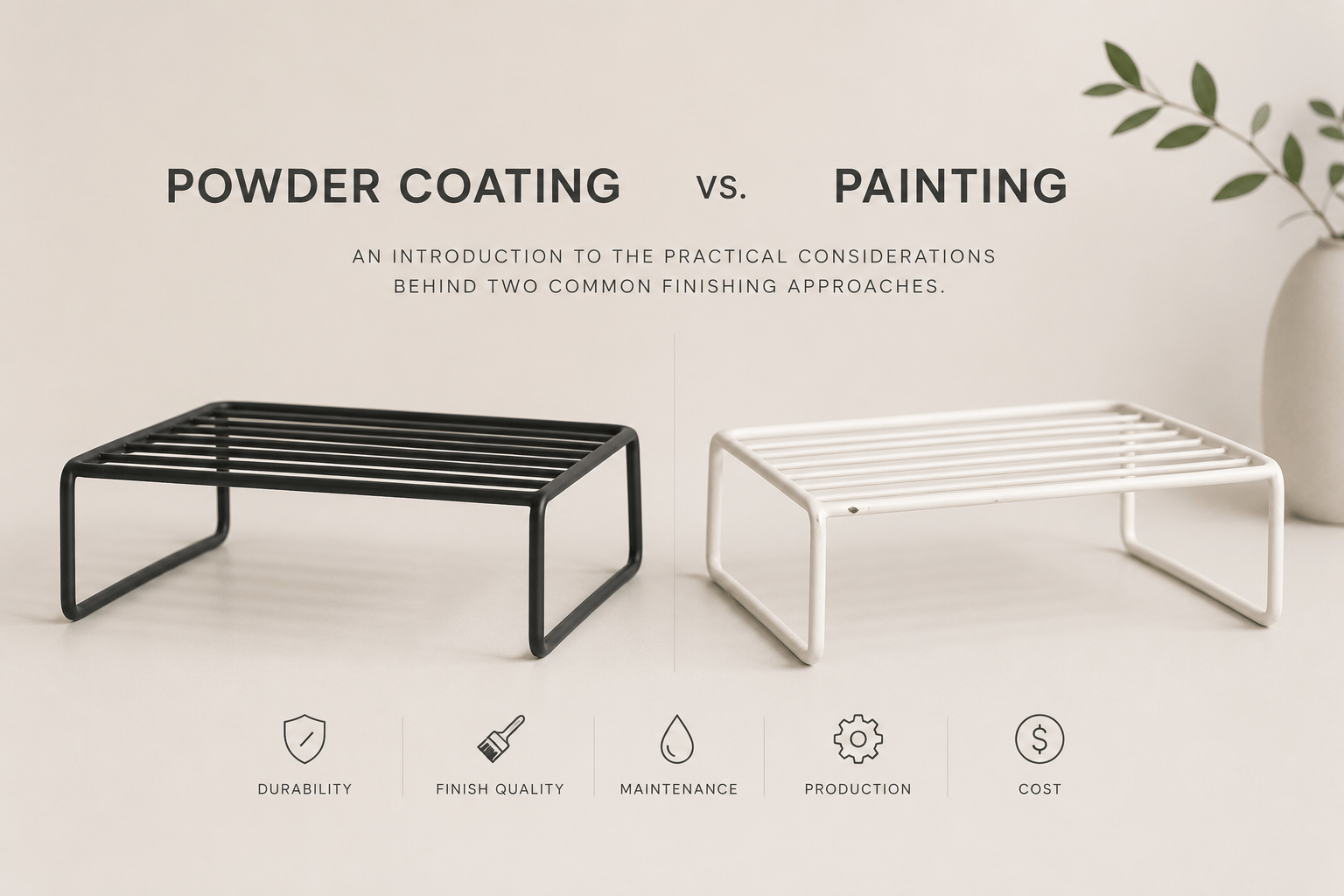
- A different powder-coated finish
- Softer corner radiuses
- A more refined wire pattern
- Updated dimensions or better handles
- Improved feet or protective pads
- More compact packaging
- Coordinated labels and instructions
Packaging, photography and instruction materials also influence the finished collection. Thoughtful refinement can create more value than dramatic redesign. See considerations for selecting a finish for metal products.
Follow Trends Without Chasing Them
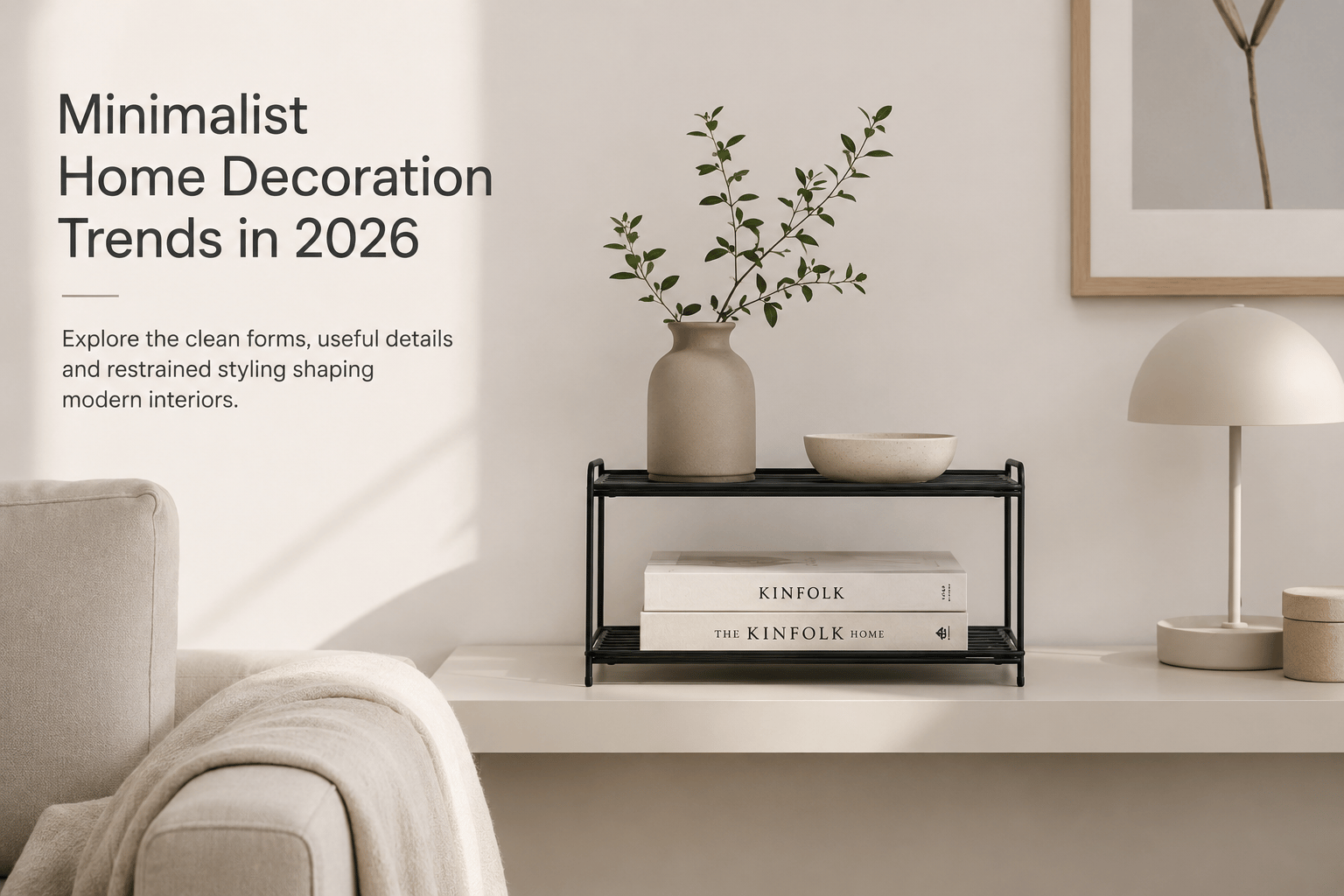
Home decoration trends change regularly, but private-label brands do not need to copy every short-term style. A practical approach is to identify directions likely to remain relevant, such as minimalist forms, warm neutral colours, natural materials, matte finishes, compact storage, multifunctional products and easy-to-clean surfaces.
Products based on longer-term practical preferences may remain useful for longer than those based only on a temporary visual trend. Review current minimalist home decoration trends for context.
Customisation Should Improve the Customer Experience
The best customisation is not added simply to make a product look different. It should make the product more useful, appropriate or easier to sell.
- Adjusting dimensions for local homes
- Increasing storage capacity or stability
- Selecting finishes suited to regional preferences
- Making assembly easier
- Reducing packaging volume
- Adapting packaging for retail display
- Adding brand-specific labels or instructions
When customisation solves a genuine customer or retail need, it becomes a meaningful distinction.
Work with a Manufacturer That Understands Product Development
Private-label projects usually require more than manufacturing alone. A capable OEM manufacturing partner may help refine structure, recommend materials, improve durability, simplify assembly, optimise production, improve packing efficiency, review finishes and develop prototypes.
The relationship becomes collaborative rather than purely transactional. That collaboration can support stronger products and a more controlled OEM metal product development process.
Consistency Builds Trust
Customers may first notice a product because of its appearance, but they are more likely to return when quality meets expectations. If every basket, organiser or display stand maintains consistent finishes, construction and design language, customers can begin to recognise the brand rather than judging each item in isolation.
A Brand Is Built One Product at a Time
Private label does not require launching hundreds of products at once. A brand can begin with a focused collection of carefully selected products.
Once the initial products establish a clear identity, the range can expand into complementary categories while retaining the same principles. This supports more controlled growth because each new product reinforces an established direction.
Elements of a Strong Private-Label Home Collection
- ✓ Clear target customer
- ✓ Consistent design direction
- ✓ Coordinated colours and finishes
- ✓ Complementary product categories
- ✓ Useful customisation
- ✓ Reliable construction quality
- ✓ Cohesive packaging
- ✓ Consistent photography and presentation
- ✓ Practical retail and shipping considerations
- ✓ A repeatable product-development process
Private-Label Product Development Checklist
- ✓ Target market
- ✓ Target customer
- ✓ Product categories
- ✓ Product dimensions
- ✓ Preferred materials
- ✓ Surface finish
- ✓ Colour palette
- ✓ Branding requirements
- ✓ Packaging format
- ✓ Barcode or label requirements
- ✓ Assembly requirements
- ✓ Expected load or storage capacity
- ✓ Estimated order quantity
- ✓ Target price
- ✓ Required launch date
- ✓ Reference images or drawings
Final Thoughts
Private-label opportunities in home and living are supported by demand for products combining thoughtful design, reliable quality and practical everyday use. Success is not necessarily determined by the largest catalogue, but by a collection that feels consistent, purposeful and aligned with its target market.
Coordinated product selection, useful customisation, reliable quality and long-term brand building can help businesses create collections customers remember. Explore private-label product development or discuss your private-label project.
Frequently Asked Questions
What are private-label home and living products?
They are products manufactured for a distributor, retailer or brand and sold under that company’s own name, with customisation ranging from finishes and packaging to more extensive OEM development.
Is private label the same as OEM manufacturing?
They overlap, but are not identical. Private label focuses on selling under the buyer’s brand, while OEM manufacturing may include broader product engineering and custom development.
Do private-label products need a completely new design?
No. A project may adapt an existing design through dimensions, finishes, packaging or branding, or it may involve a more extensively customised product.
Which home and living products are suitable for private label?
Storage baskets, organisers, shelves, display risers, bathroom racks, kitchen storage and related practical home products may be suitable when aligned with the target market.
Can colours, finishes and packaging be customised?
Yes, depending on the product and project requirements. Options may include coordinated colours, surface finishes, labels, instructions and retail packaging.
Why is consistency important in a private-label collection?
Consistent design, finish, construction and presentation help customers recognise the collection and form expectations about the brand.
What information should a buyer provide to start a private-label project?
Provide the target market, product category, concept, dimensions, preferred material, colour and finish, branding and packaging requirements, estimated quantity, target price, expected launch date and a reference drawing or image when available.
- • Target market
- • Product category
- • Product concept
- • Required dimensions
- • Preferred material
- • Colour and finish
- • Branding requirements
- • Packaging requirements
- • Estimated quantity
- • Target price
- • Expected launch date
- • Reference drawing or image, when available
Develop a Private-Label Home & Living Collection
Share your target market, product categories, preferred materials, finishes, branding requirements and estimated quantities with Steel Craft Living.